What the specs on a gaming processor listing really mean
What the specs on a gaming processor listing really mean: cores, threads, cache, socket, TDP and boost clock explained with the Ryzen 7 9800X3D.
On this page
Processor listings are dense with numbers. This source-informed explainer decodes them using the AMD Ryzen 7 9800X3D as the example, with figures from AMD's specification page and two independent reviews, TechPowerUp and TechSpot. We did not test the chip ourselves.
Cores and threads
AMD lists eight cores and sixteen threads. Cores are physical processing units, and threads let each core handle two streams of work. More threads help with streaming, recording or rendering, while many games depend more on the speed of a few cores.
Cache
Cache is fast memory on the processor. AMD lists 96 MB of L3 cache, and the X3D name refers to its stacked cache design. It is not extra RAM for programs. How much it helps depends on the game, which is why 1080p testing, where the processor is the limit, shows the largest gaps.
Clock speed
AMD lists 4.7 GHz base and 5.2 GHz boost. Base is the guaranteed speed, boost is the peak, and real speed depends on cooling and load. Do not compare clocks across different designs. AMD lists the chip as unlocked, which means it allows tuning, but tuning is optional and carries its own risks.
Socket and platform
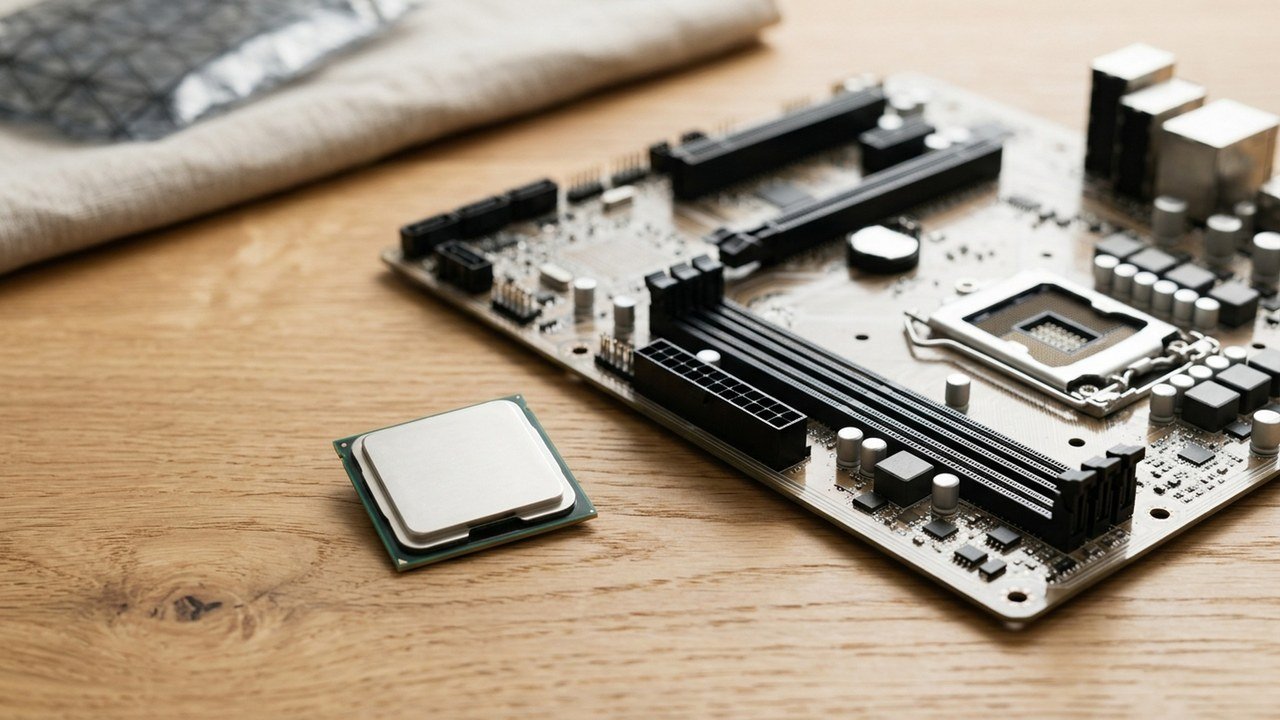
The socket must match the board. AMD lists AM5, DDR5-5600 on two modules and PCIe 5.0. AMD's memory table also depends on the number of modules and their rank, so a memory kit's advertised speed does not guarantee that speed on every board. Check the board maker's lists.
TDP and power
AMD lists a default TDP of 120 W. TDP is a thermal design number used to size coolers, not a power measurement. TechPowerUp measured around 65 W of gaming draw, far below that figure. Loads that use every core, such as rendering, can draw more.
Integrated graphics
Check whether the chip has built-in graphics. For gaming you will want a graphics card either way, so confirm the listing before relying on integrated graphics for a fallback.
Performance claims
AMD claims up to 20 percent over the 285K and 8 percent over its 7800X3D in its own testing. TechPowerUp measured about 13 percent over the 285K and 3.4 percent over the 7800X3D at 1080p, and TechSpot measured 24 percent over the 285K across 45 games at 1080p. The measured gap depends on the games, the settings and the resolution, so read each result as a range.
Reading a listing in order
Work down the spec page in the same order every time. First the socket and memory type, because they decide whether the chip works with your board. Then the core and thread counts and the cache, which describe what the chip can do. Then the clocks and the TDP, which tell you what cooling it needs. Finally the cooler and warranty line, which tell you what is and is not in the box. A listing that leaves out any of the first four deserves a question to the seller.
A worked example
Suppose two listings both show eight cores. One has a larger cache and a lower clock, the other has a higher clock and less cache. The clock numbers suggest the second is faster, but for games that repeat many memory lookups the cache may matter more, which is the idea behind AMD's stacked cache design. Neither number settles the question. The deciding evidence is a test of the games you play at your resolution, which is why we cite independent reviews and not the spec sheet alone.
What the spec page cannot tell you
A spec page does not tell you how the chip behaves in your case with your cooler, how loud the cooler is, or how stable your memory kit is on your board. It also does not tell you what the processor does in a game that is limited by the graphics card. Treat the specs as a way to rule options out, not to rank the ones that remain.
Power and cooling are linked
A higher TDP asks more of the cooler, and AMD's recommendation of liquid cooling for this chip is part of the spec, not an optional extra. Check that the cooler supports the AM5 socket, that it fits the case and that the memory modules do not block it. A cooler that fits a different socket may need a different mounting kit.
Platform cost
The chip's price is only one line. AM5 requires DDR5 memory, so an owner of an older platform pays for a board, memory and often a cooler as well. Add those before you compare a processor against a cheaper one.
Finally, look at what the listing says about the warranty and the seller. A specification is only as useful as the part you actually receive, and a clear return policy is the simplest check that the part is genuine and as described.
Cooler included
AMD says the boxed processor ships without a cooler and recommends liquid cooling for optimal performance. Budget for the cooler and check that it fits your case and board.
Putting it together
Read how to choose a gaming processor, the review and mistakes to avoid for the buying side.
AMD Ryzen 7 9800X3D
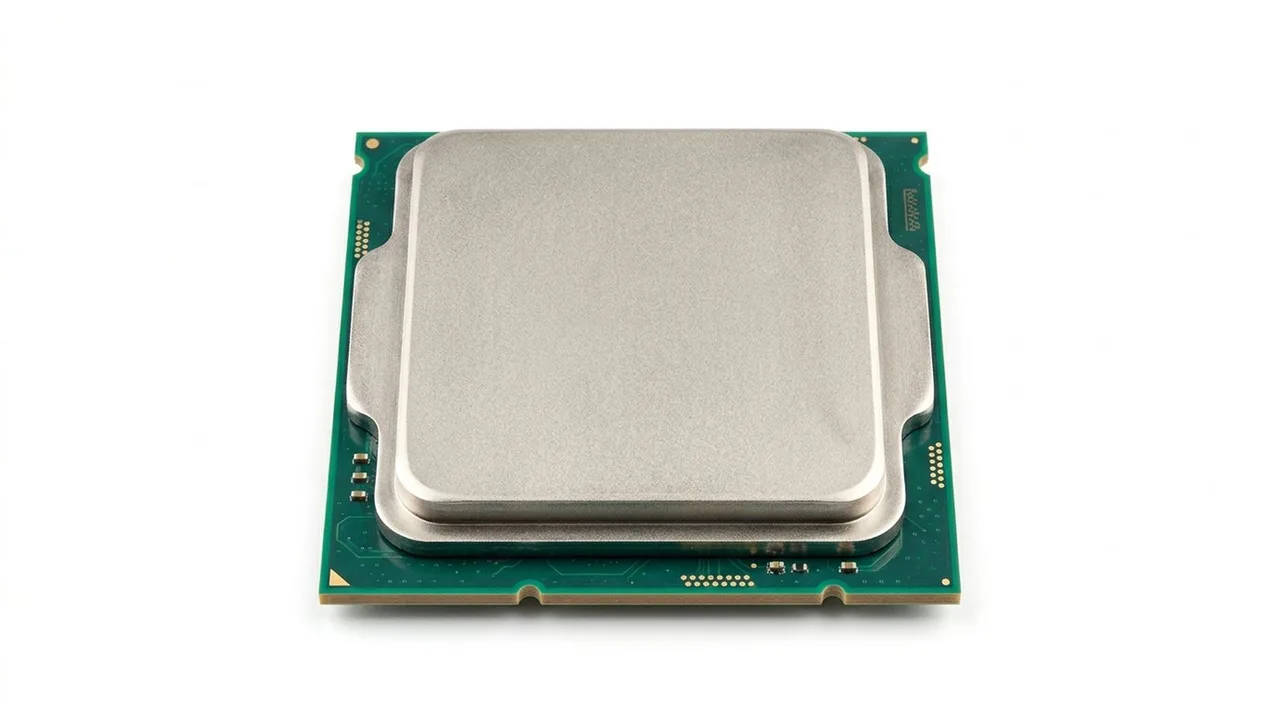
An 8 core, 16 thread AM5 processor with 96 MB L3 cache.
Be careful with
Comparing clock speeds between different chip designs, or reading TDP as power draw.
The practical answer
Confirm the socket and memory first, then cache and cores, and plan the cooler and power supply separately.
Questions people ask
What is a socket?
The physical and electrical connection to the motherboard.
What is TDP?
A design power figure used for cooling planning. Real power draw can differ.
What is boost clock?
The maximum speed the chip can reach briefly.
What does 8 cores 16 threads mean?
Eight physical cores, each handling two threads.
Sources and scope
Reference material is linked for the scope described below. This is not a claim that every statement or current retailer offer has been independently verified.
- AMD Ryzen 7 9800X3D desktop processor (AMD): manufacturer specifications
- AMD introduces the Ryzen 7 9800X3D (AMD press release, 31 October 2024): manufacturer claims, not independent testing
- AMD Ryzen 7 9800X3D review (TechPowerUp): independent benchmark review
- AMD Ryzen 7 9800X3D vs Intel Core Ultra 9 285K (TechSpot): independent benchmark comparison
No hands-on testing or systematic reliability study was performed. Confirm current instructions, seller, model and box contents before ordering.