Gaming processor mistakes to avoid before you buy
Gaming processor mistakes to avoid before you buy: wrong socket, missing cooler, ignoring the graphics card and paying for cores you will not use.
On this page
- Mistake 1: wrong socket
- Mistake 2: forgetting the cooler
- Mistake 3: ignoring the graphics card
- Mistake 4: paying for unused cores
- Mistake 5: unreliable sellers
- A short checklist before you order
- Why these mistakes are common
- What each mistake costs
- When it is fine to buy
- A worked example
- Where to go next
- Mistake 6: ignoring memory
- Mistake 7: skipping the power supply check
- The practical answer
Processors are easy to buy wrongly, and most of the mistakes are about the parts around the chip, not the chip. This is source-informed advice, not a hands on test. The example is the AMD Ryzen 7 9800X3D, and the figures come from AMD's page and two independent reviews.
Mistake 1: wrong socket
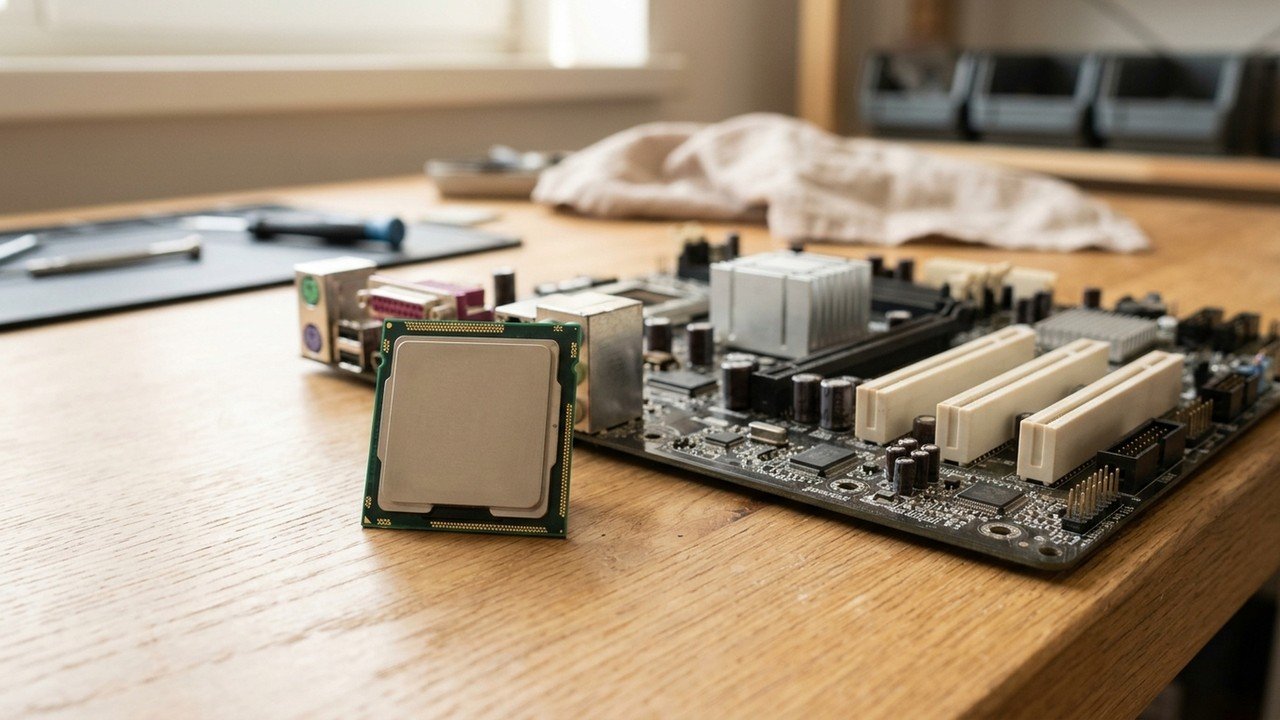
AMD lists the 9800X3D for AM5. A matching socket does not guarantee the board is ready for the chip, because some boards need a firmware update first. Fix: check the board maker's support list for the exact revision and read the update instructions before you take anything apart.
Mistake 2: forgetting the cooler
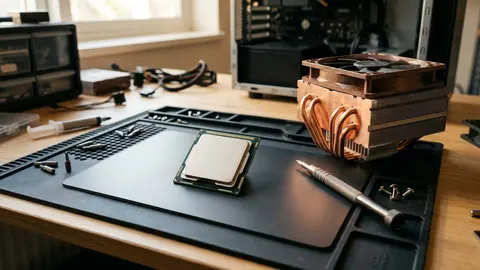
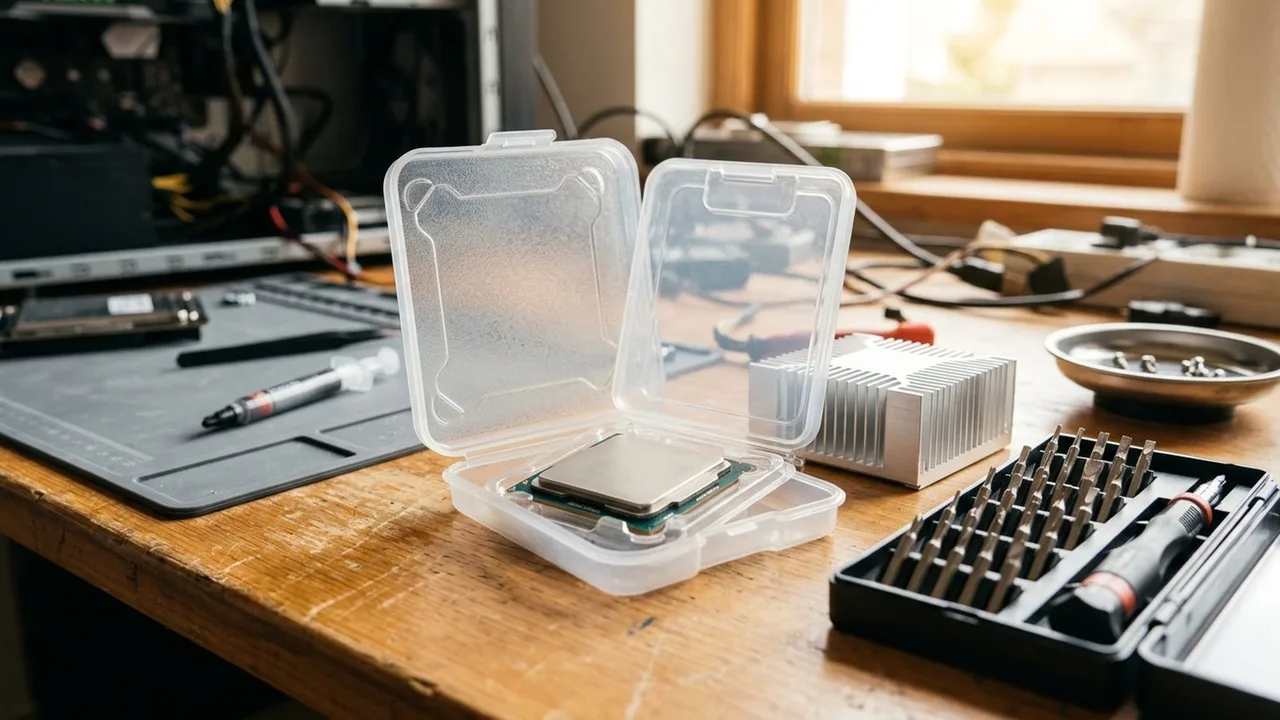
AMD says the boxed processor has no cooler and recommends liquid cooling for optimal performance. Fix: budget for a cooler and confirm it fits your case and memory.
Mistake 3: ignoring the graphics card
TechPowerUp found gaming differences minimal at 4K, because the graphics card does most of the work. TechSpot's 24 percent lead over the 285K was across 45 games at 1080p. Fix: match the processor to your resolution and graphics card. See how to choose a gaming processor.
Mistake 4: paying for unused cores
AMD's own claims, up to 20 percent over the 285K and 8 percent over the 7800X3D, come from its testing. The independent figures differ: TechPowerUp measured about 13 percent and 3.4 percent at 1080p. Fix: prefer independent tests of the games you play.
Mistake 5: unreliable sellers
A processor is a small, high value item. Fix: buy from a seller with a clear return policy, check that the box is sealed, and keep the order records.
A short checklist before you order
Write the answers down. Which socket does the board have, and does its support list name this processor and the firmware needed? Which memory kit is on the board's list? Which cooler fits the case, and is it in the budget? What resolution and graphics card will you use, and what do independent tests show for that case? What is the seller's return policy, and is the item sold and shipped by a seller you recognise?
If any answer is missing, wait. The cost of waiting is a few days. The cost of a wrong guess is a processor that does not start, a cooler that does not fit or a purchase that does little for your frame rate.
Why these mistakes are common
Processor pages show big, clean numbers, such as clock speed and a percentage lead over a rival. The things that go wrong sit in the small print: firmware, memory lists, the cooler line and the resolution that a test used. AMD's own announcement gives the headline figures, while independent reviews such as TechPowerUp's and TechSpot's give the settings behind them, so reading both is the cheapest protection.
What each mistake costs
A wrong socket or missing firmware support costs a return and a delay, and sometimes a second board. A missing cooler costs a few days of waiting with a machine you cannot use. Overspending at 4K costs the difference between a top processor and a mid-range one, money that would have bought a better graphics card, which is the part that sets the limit at that resolution. A misread TDP costs a power supply that is bigger than needed, or occasionally smaller. Seller problems cost the most, because a counterfeit or damaged part may not be covered.
Most of these are avoidable with ten minutes of reading before you click. The checklist above is short on purpose, so you will actually use it.
When it is fine to buy
If the board's support list names the chip and the firmware, the memory kit is on the list, the cooler fits, your resolution and graphics card suit a processor-limited workload and the seller has clear return terms, the purchase is sound. At that point the choice between a top chip and a cheaper one is about budget, not risk.
If you are buying on a deadline, such as before a game launch, give yourself a day for compatibility checks anyway. The checks are quick, and a rushed purchase is when most of these mistakes happen.
A worked example
A player on a 4K screen with a mid-range graphics card buys a top processor for a 20 percent headline gain. At that resolution the card sets the limit, so the gain is small, and the money would have been better spent on the card. The mistake was reading a 1080p figure as a 4K promise.
Where to go next
Read gaming processor specs explained, the review and the best gaming processors.
Mistake 6: ignoring memory
AMD lists DDR5-5600 for two modules and distinguishes module count and rank. Fix: check the board's memory list, and avoid assuming a kit's advertised speed will run on every board.
Mistake 7: skipping the power supply check
AMD lists 120 W TDP, but TechPowerUp measured around 65 W during gaming. Fix: size the power supply for the whole build, and use TDP only to think about cooling.
AMD Ryzen 7 9800X3D
An 8 core, 16 thread AM5 processor; check board support, cooler and memory first.
Be careful with
Buying a processor before checking compatibility and your resolution.
The practical answer
Check the platform, match the chip to your resolution, plan the cooler and power, and buy from a trusted seller.
Questions people ask
Do I need a new motherboard?
Often, when changing generation.
Is more cores better for gaming?
Not beyond a point.
Should I buy used?
Be careful. Counterfeits exist.
Does a cooler come with it?
Check the listing.
Sources and scope
Reference material is linked for the scope described below. This is not a claim that every statement or current retailer offer has been independently verified.
- AMD Ryzen 7 9800X3D desktop processor (AMD): manufacturer specifications
- AMD introduces the Ryzen 7 9800X3D (AMD press release, 31 October 2024): manufacturer claims, not independent testing
- AMD Ryzen 7 9800X3D review (TechPowerUp): independent benchmark review
- AMD Ryzen 7 9800X3D vs Intel Core Ultra 9 285K (TechSpot): independent benchmark comparison
No hands-on testing or systematic reliability study was performed. Confirm current instructions, seller, model and box contents before ordering.