How to choose a wireless microphone system
How to choose a wireless microphone system: lavalier or handheld, 2.4GHz or UHF, range, battery, receivers and the mistakes that ruin audio.
On this page
This guide is source-informed, not a hands on test. We read the manufacturers' pages and retailer listings for the five systems below and used general knowledge about wireless audio. We did not use any of them, so treat the specs as the makers' claims and confirm them on the product page.
Decide what you are recording
Wireless microphone systems solve one problem: you want clean voice audio without a cable and without standing next to the camera. The right system depends on who is speaking and where. A solo vlogger clipping a mic to a shirt has different needs from a teacher in a classroom, a singer at a small gig or a presenter walking across a stage. Write down the situation first, because the best system for a street interview is wrong for a wedding band.
Compact clip on systems
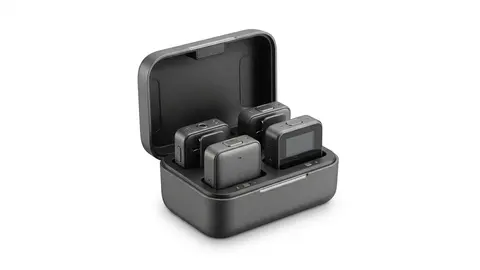
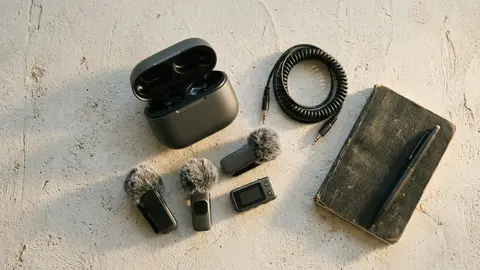
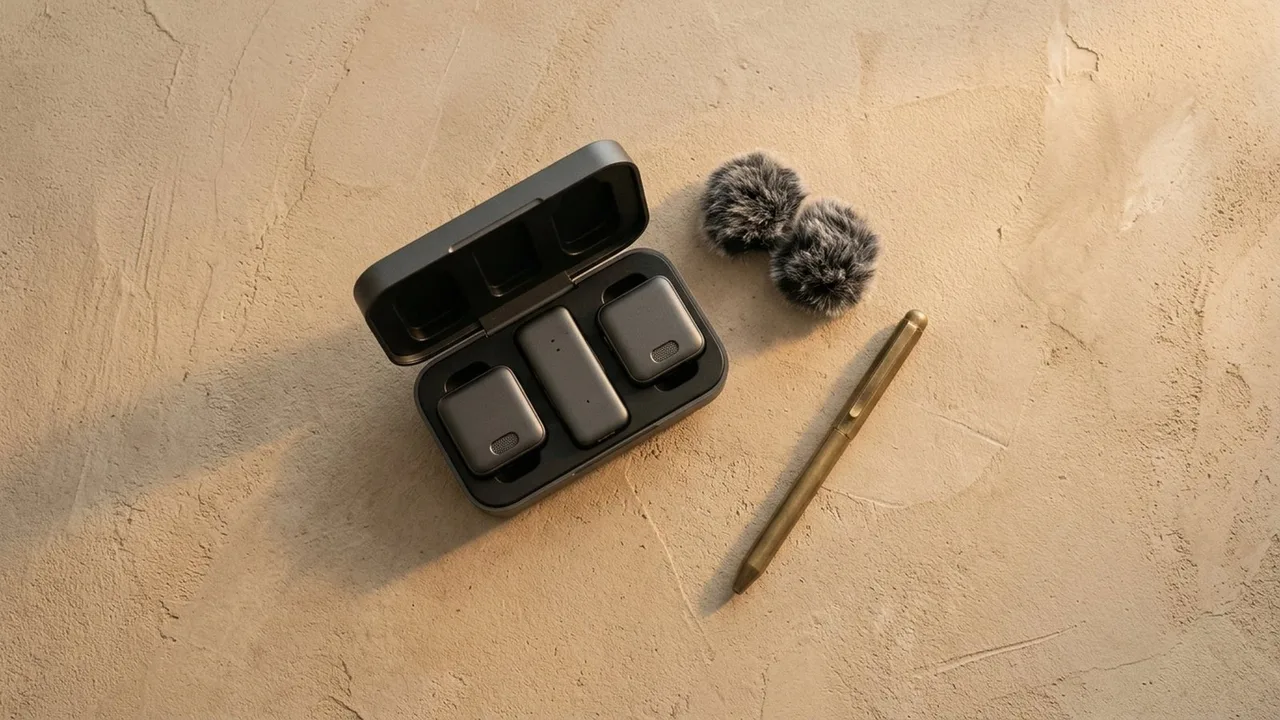
The DJI Mic 3 and DJI Mic 2 are compact systems sold as two transmitters, one receiver and a charging case. Each transmitter clips to clothing or sits in a pocket, and the receiver attaches to a camera or phone. The appeal is simplicity: pairing is quick and the case charges everything. DJI lists the Mic 3 as dual band, using 2.4 and 5 GHz, and the Mic 2 as 2.4 GHz only. The 2.4 GHz band is busy in cities because Wi-Fi and Bluetooth share it. That does not stop these systems working, though signal quality can vary in crowded places.
Handheld UHF systems
The three Phenyx Pro systems are different in kind. The PTU-71-2H has auto scan, the PTU-52-2H lists tunable frequency, and the PTU-5000-4H is a four channel fixed frequency set. These are handheld microphones with a receiver, aimed at speaking, singing and presenting. UHF systems use their own radio bands, so they can be more stable in a venue, but you must pay attention to channels. Auto scan finds a clear one for you, tunable lets you pick, and fixed frequency means what you buy is what you get, which matters if more than one set shares a room.
Range and reliability
Range figures on listings are measured in open space. Bodies, walls and crowds cut them. DJI lists 400 m for the Mic 3 in open, interference free conditions and 80 m in a high interference lab case. Phenyx lists 100 m line of sight for the PTU-71 and 80 m for the PTU-5000. If you need to move across a room, test the system there before you rely on it. For a camera shot a few metres from the speaker, almost any system is fine. For a large stage, look for UHF and a receiver with proper antennas.
Battery and charging
A charging case, as on the DJI sets, means you top up the transmitters and receiver when you put them away. DJI lists 8 hours for the Mic 3 transmitter and 6 hours for the Mic 2. Handheld systems usually use replaceable batteries or rechargeable cells, and Phenyx lists at least 8 hours on AA cells. Check the stated runtime, and plan for one spare set if the recording matters.
Connections
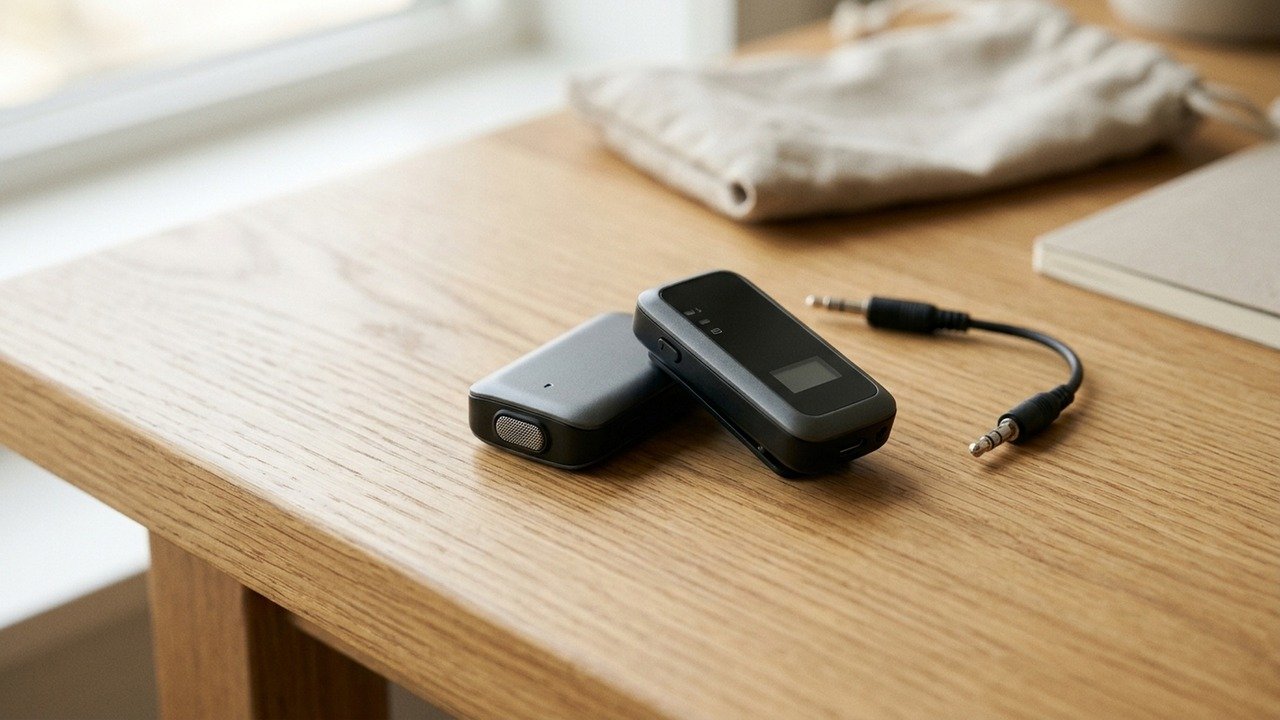
Check how the receiver reaches your recorder. A camera 3.5 mm input, USB-C and XLR are common. A phone may need an adapter, and DJI sells a Lightning adapter for the Mic 3 separately. The Phenyx receivers output through XLR and 1/4-inch jacks, which suit mixers and speakers better than cameras. Make sure the connector on your camera or phone matches the receiver before you buy.
Sound control
Look for gain control, limiters, safety tracks and noise reduction. DJI lists adaptive gain and noise cancelling on the Mic 3, with noise cancelling off by default. A limiter helps if a speaker suddenly gets loud. A foam or fur windscreen helps outdoors. Our explainer do you need a wireless microphone for video covers when the camera mic is enough.
How to shortlist
Pick the category (clip on or handheld), then compare range, battery, connections and the number of channels. For a camera or phone, shortlist the DJI sets. For a stage or classroom, shortlist the Phenyx sets. Compare the one or two you like against the backup options, the warranty and the price in your region. See our best wireless microphone systems, the specs explained and the mistakes to avoid.
DJI Mic 3
A wireless microphone set with two transmitters, a receiver and a charging case.
DJI Mic 2
An all in one wireless microphone set with two transmitters and a charging case.
Phenyx Pro Dual UHF Auto Scan Handheld Wireless
A dual UHF handheld wireless system with auto scan.
Phenyx Pro Dual UHF Tunable Frequency Wireless Microphone
A dual UHF handheld wireless system with tunable frequency.
Phenyx Pro 4-Ch UHF Fixed Frequency Wireless Microphone
A four channel fixed frequency UHF handheld wireless system.
Budget and value
Price should come last, after type, connections and battery. A cheaper set that does not fit your camera is worth less than a dearer one that does. Compare what is in the box too: DJI lists a charging case, adapters and a locking 3.5 mm cable with the Mic 3, while a handheld system may need cables, stands and batteries you buy separately. Phenyx lists a one year warranty on its systems and extends it by six months if you register within 30 days, and a longer warranty is worth a little more money on gear that will be carried around.
Common situations
A solo vlogger who walks and talks outdoors wants a clip on set with a windscreen and a backup recording. Two people interviewing on a street want two transmitters and a receiver that feeds the camera. A teacher in a classroom wants a handheld system with an output that matches the speaker. A small band that needs several vocal microphones wants a multi channel handheld system like the PTU-5000-4H, which Phenyx lists with four fixed frequencies and a rack mountable receiver. A speaker in a hall wants the most stable radio link they can afford, which usually points to UHF.
Testing before you commit
Whatever you pick, test it soon after it arrives, so you can return it if it fails. Pair it, walk to the edge of the space you need, and record a short clip on the device you will actually use. Listen on headphones. If you hear dropouts or hiss at the distances you need, return it while you still can.
Be careful with
Trusting the range number on the box. Test in the place where you will actually record, with people and walls in the way.
The practical answer
For video and vlogging, a compact clip on system is the easy choice. For talking, singing and presenting, a handheld UHF set is the traditional one. Choose the one that matches your situation, then check connectors and batteries.
Questions people ask
What is the difference between 2.4GHz and UHF?
2.4GHz systems pair automatically and are easy, but share a busy band with Wi Fi and Bluetooth. UHF systems use their own bands and are common in venues, though you may need to pick or scan for a clear channel.
How many microphones do I need?
One for a solo creator, two for interviews or two presenters. Four channel systems suit meetings and bands.
Does the range claim matter?
It is a best case figure in open space. Walls, bodies and crowds shorten it a lot.
Can I use wireless mics with a phone?
Often yes, with the right adapter or receiver. Check the connector type on the listing.
Sources and scope
Reference material is linked for the scope described below. This is not a claim that every statement or current retailer offer has been independently verified.
- DJI Mic 3 specifications (DJI): manufacturer specifications
- DJI Mic 2 specifications (DJI): manufacturer specifications
- Phenyx Pro PTU-71 (Phenyx Pro): manufacturer specifications
- Phenyx Pro PTU-52-2H (zZounds): retailer listing of manufacturer specifications
- Phenyx Pro PTU-5000-4H (zZounds): retailer listing of manufacturer specifications
No hands-on testing or systematic reliability study was performed. Confirm current instructions, seller, model and box contents before ordering.