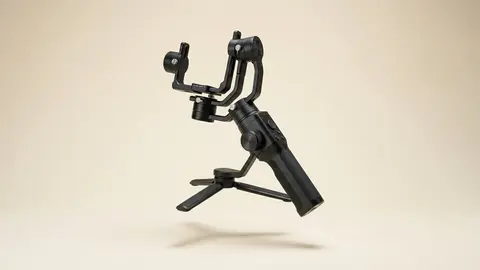
What the specs on a camera gimbal listing really mean
What the specs on a camera gimbal listing really mean: payload, axes, follow modes, battery, quick release and compatibility explained with the DJI RS 4 Mini.
On this page
Gimbal listings are full of numbers and branded mode names. This source-informed explainer decodes them using the DJI RS 4 Mini as the example, taking its figures from DJI's specification page. We did not use it, and the specs are the maker's claims. If you are still deciding whether you need a gimbal at all, read gimbal or in body stabilization first.
Payload: the number that matters
Payload is the maximum weight of camera plus lens the gimbal can carry. DJI lists a tested payload of 0.4 to 2 kg for the RS 4 Mini, and the gimbal itself weighs about 890 g. Add up your body, lens, any filter, a microphone and a cage. Compare the total with the stated payload and keep a margin of at least 10 to 20 percent. A gimbal pushed to its limit drains its battery quickly, jitters and wears its motors. A compact gimbal like the RS 4 Mini is made for lighter mirrorless setups, so heavy zoom lenses may be out of reach. Notice too that the figure has a lower bound. A camera that is too light can also be hard to balance, so very small cameras may need a counterweight or a different gimbal.
Axes
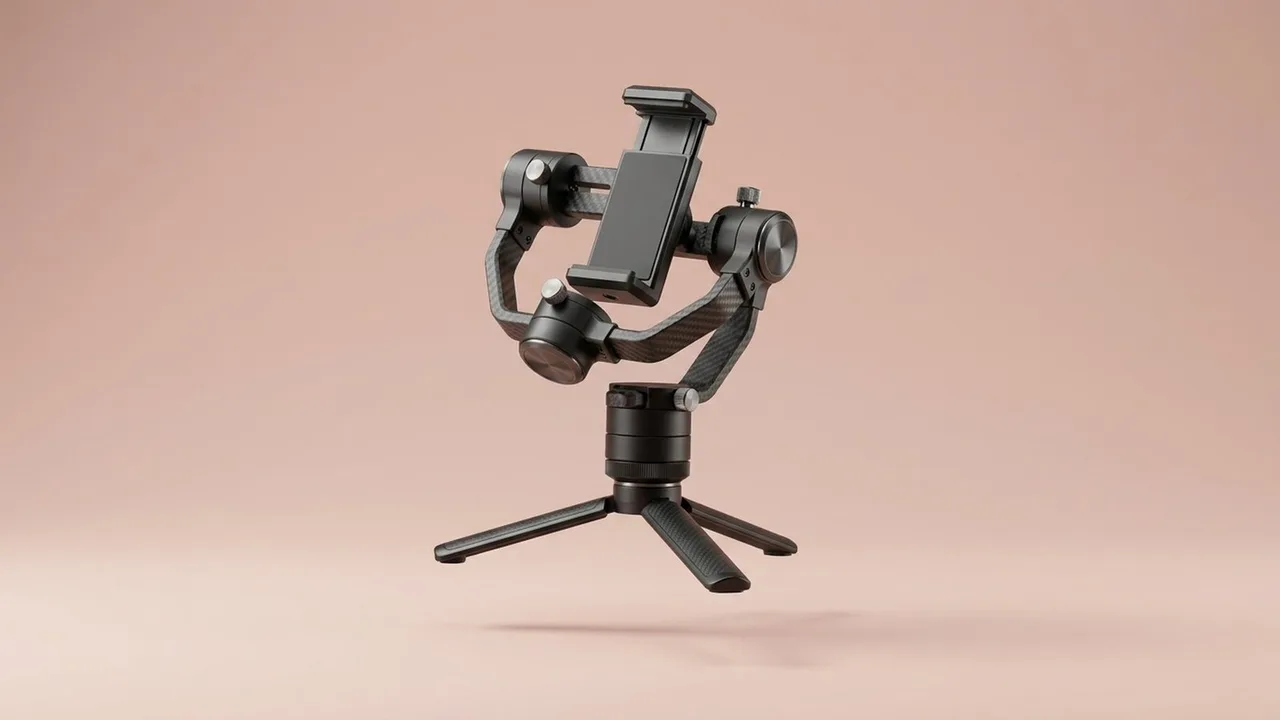
Three axes means pan (left and right), tilt (up and down) and roll (tilting sideways). DJI lists the RS 4 Mini as rotating 360 degrees in pan, from minus 110 to plus 210 degrees in tilt, and from minus 95 to plus 235 degrees in roll. The roll axis keeps the horizon level, which is the main reason gimbal footage looks so calm. DJI also lists vertical shooting, which matters for vertical video.
Follow modes and lock modes
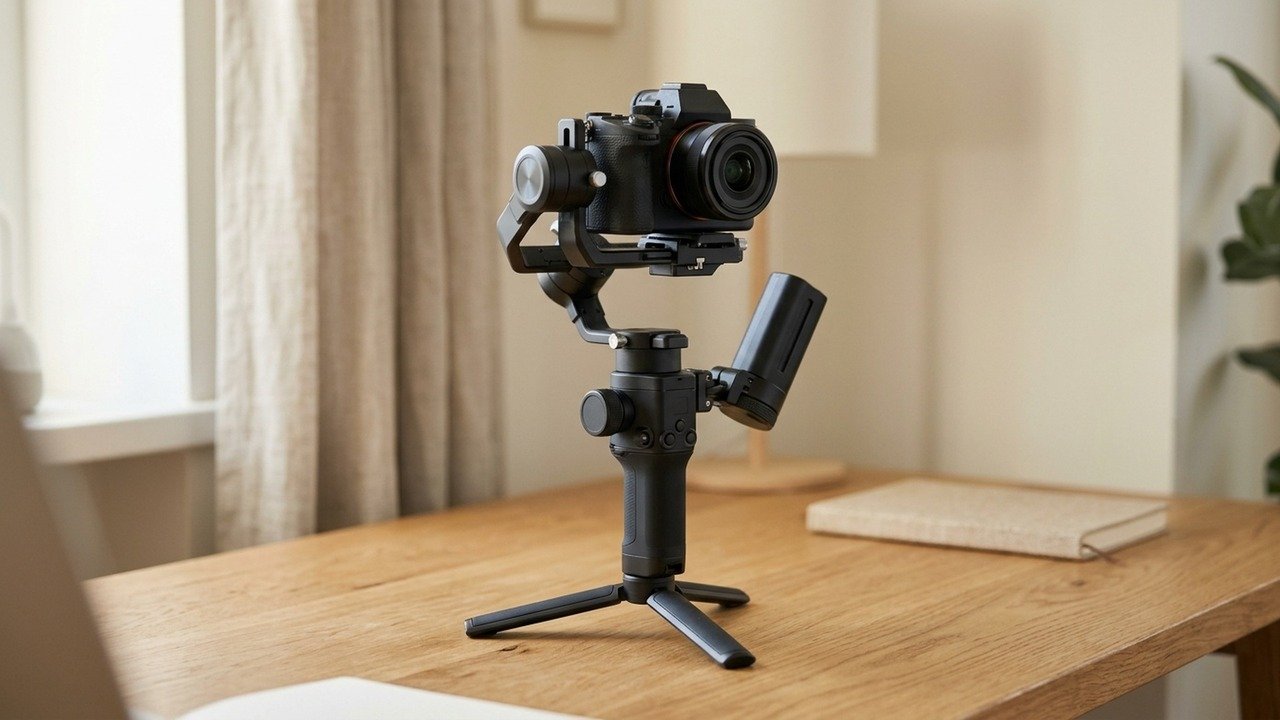
Marketing names differ, but the ideas are consistent. In pan follow, the gimbal follows your left and right movement and keeps tilt steady. In full follow, it tracks pan and tilt. In lock mode, it holds the camera pointing in a fixed direction while you move. A fast follow mode reacts quickly for action. Spend ten minutes in an empty room trying each one, because the right mode makes a shot look planned.
Balancing and quick release
Balancing is adjusting the camera's position until it sits level without power. A gimbal that is well balanced runs longer and smoother. DJI lists automatic axis locks on the RS 4 Mini, which hold the axes while you balance and pack. A quick release plate lets you swap cameras or put the camera in a case without rebalancing every time. Check whether the plate is included and whether it fits your tripod, and note that DJI lists a 1/4-inch 20 thread and a NATO port for accessories.
Battery
Run time on the listing is for ideal conditions. DJI lists up to 13 hours for the RS 4 Mini and a full charge in about 1 hour 50 minutes at 30 W. Cold weather and heavy cameras shorten it. DJI lists a USB-C port that both charges the gimbal and carries camera control. Carry a spare power bank for a long shoot.
Compatibility
DJI's compatibility information sits on a separate page from the main specifications, so open that list and find your camera. Control functions such as start and stop recording, focus and zoom depend on the exact camera model and the cable. Without that support, you may balance the camera but still need to press buttons by hand. DJI lists Bluetooth 5.1 on the gimbal and an Intelligent Tracking Module as an accessory, which is not part of the base gimbal.
Combo contents
A combo bundles accessories with the base gimbal. Typical extras include a grip, a stand, a bag or a phone holder. The DJI specifications page we read does not list combo contents, so check the store page for the exact box contents of the version you buy. They are useful if you will use them and a waste if you will not. Compare the combo price with the base price, and count only the items you want.
Put it together
Read how to choose a camera gimbal for the full buying process and the vlogging camera guide if you are building a kit.
DJI RS 4 Mini Combo
A compact camera gimbal stabilizer combo for Canon, Sony, Nikon and Fujifilm cameras.
How to use the numbers
Turn the specs into a short worksheet. Write your camera body weight, the lens weight and each accessory, then add them. Compare the total with the payload range. Next, check the gimbal's run time against the length of your longest day, and the charge time against when you can plug in. Then check that your camera model is on the compatibility list and that the cable is in the box. If every line passes, the gimbal is a sensible candidate. If any line fails, it is cheaper to find out now than at a shoot.
Specs that are easy to overlook
Weight on your arm matters more than a spec sheet suggests. A gimbal of about 890 g plus a camera and lens can feel heavy after an hour of walking, so think about how long you will hold it. Also look at the thread and mounting options, since a tripod or a handle you already own may not fit. And check whether firmware updates are done in an app, since a gimbal that cannot update may lose camera support later.
Be careful with
Ignoring the payload limit. A gimbal near its limit shakes, drains and wears out faster.
The practical answer
Weigh your camera and lens, find your model on the compatibility list and compare the combo contents. Then practice balancing before the day you need it.
Questions people ask
What is payload?
The maximum weight of camera plus lens that the gimbal is rated to carry. Stay comfortably below it.
What is a Combo?
A bundle that adds accessories to the base gimbal, such as a stand or extra plates. Read what is in the box.
What are follow modes?
Modes that decide which axes move with you and which stay locked, such as pan follow or full lock.
Does it support every camera?
No. The listing names brands, but control features depend on the camera model and cable.
Sources and scope
Reference material is linked for the scope described below. This is not a claim that every statement or current retailer offer has been independently verified.
- DJI RS 4 Mini specifications (DJI): manufacturer specifications
No hands-on testing or systematic reliability study was performed. Confirm current instructions, seller, model and box contents before ordering.