How to choose a camera lens
How to choose a camera lens: focal length, aperture, mount, autofocus and the trade offs between prime and zoom, using the Canon RF 50mm F1.8 STM as an example.
On this page
This guide is source-informed, not a hands on test. We read Canon's specification page for the RF50mm F1.8 STM and used general knowledge about lenses. We did not use the lens, so confirm the numbers on the product page before you buy.
Start with the mount
A lens must fit your camera's mount. The Canon RF50mm F1.8 STM is for Canon RF mount cameras. Adapters exist between some systems, but they add bulk and can limit features. Always confirm the mount before you look at anything else, because a lens for the wrong mount is the most common and the most avoidable mistake.
Focal length
Focal length sets the field of view. Short numbers are wide, long numbers are telephoto. 50mm is a classic, natural perspective that works for portraits, street photos and everyday scenes. If your camera has a smaller sensor, the view is narrower than the number suggests. A useful habit is to take a few photos with your current lens at the focal length you are considering, and check whether you like the framing before you spend money.
Aperture
Aperture, written as f/1.8, controls how much light enters. Lower numbers let in more light, which helps in dim rooms and creates a softer background. Canon lists a range from f/1.8 to f/22 for this lens. An f/1.8 lens is far better in low light than a typical kit zoom, and it lets you separate a subject from the background. Canon also lists seven aperture blades, which affect how the out of focus areas look.
Prime versus zoom
A prime lens has one focal length. It is simpler, lighter and usually sharper for its price. A zoom covers a range, which saves lens changes but costs size and often aperture. Many photographers own one fast prime and one zoom. If you are unsure, start with the lens that covers what you shoot most.
Autofocus and stabilization
STM in the name refers to Canon's stepping motor, which is quiet and well suited to video. Canon's specifications do not list optical image stabilization for this lens, so check whether your camera has in body stabilization to cover it. Without it, use a faster shutter speed when shooting handheld in dim light.
Build and size
A small plastic body is light, a big metal body feels solid. Canon lists the RF50mm F1.8 STM at about 160 g, with a length of 40.5 mm and a diameter of 69.2 mm and a 43 mm filter size, which makes it a good everyday lens. Small filters cost less, and the lens fits easily in a bag.
Real situations
Portraits. A 50mm f/1.8 is a classic. Low light. Wide aperture helps. Landscapes. You want wider. Sports and wildlife. You want telephoto. Video. A quiet focus motor and a fast aperture suit interviews and vlogs shot in interiors.
What to check
Mount, focal length, aperture, size, focus motor and stabilization. Also check the closest focus distance, since Canon lists 0.30 m for this lens and a magnification of 0.25 times, which is fine for small objects but not a macro lens. Read camera lens specs explained.
Canon RF50mm F1.8 STM Lens
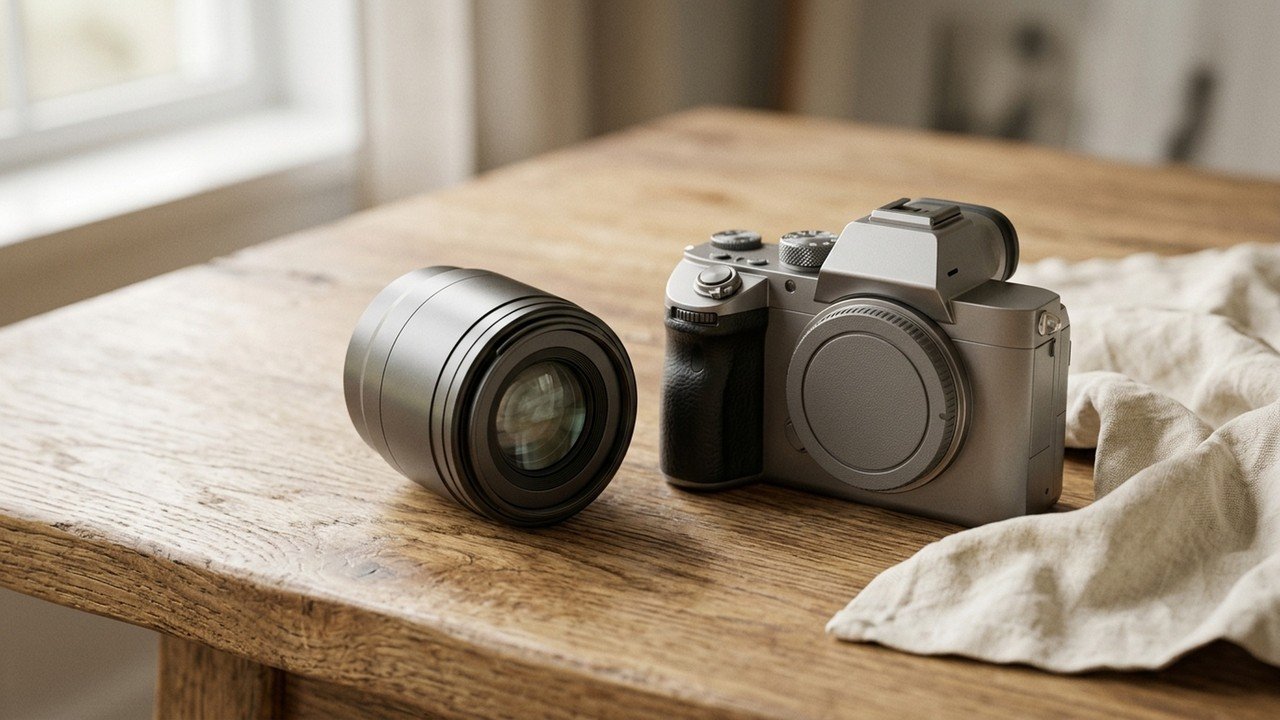
A Canon RF 50mm F1.8 STM lens.
Buying tips
Compare the price with the same focal length from other makers, and consider used lenses from reputable sellers if the budget is tight. Check the return policy, so you can test sharpness and autofocus on your own camera. Look at sample photos taken with the lens on your camera model, because the same lens can behave differently on different bodies.
Lens for video
If you shoot video, a fast prime has two advantages: it works in dim rooms without raising the camera's sensitivity, and it gives a gentle background blur that makes a subject stand out. The quiet focus motor matters because the camera microphone can pick up motor noise. Against that, a fixed focal length means you move your feet to change framing, which is awkward in a small room. For talking head clips shot from a tripod, that is rarely a problem.
Weight and balance
A light lens keeps the camera balanced on a gimbal or in the hand, which matters for walking shots. Canon lists about 160 g for this lens, which is easy to carry all day. Heavier lenses suit tripods and are tiring when held. If you plan to add a gimbal, check the payload limit against the combined weight of body and lens, and read how to choose a camera gimbal.
What the specs cannot tell you
A specification page does not tell you how sharp the lens is wide open, how the background blur looks, how it handles bright lights or how quickly it focuses on a moving subject. For those, read independent test reviews and look at sample photos. Treat this guide as a way to narrow the field, then verify with real world images before you commit.
Next steps
Once you have a lens in mind, write down the three things it must do for you, such as portraits in dim rooms, quiet focus for video and a light weight for travel. Check each against the listing. If it meets all three, buy from a seller with a clear return policy. If it meets two, ask whether the third is essential. Over time you can add a wide lens and a zoom, and the prime will remain the one you reach for on most days.
Be careful with
Buying a lens for the wrong mount. Always confirm the mount on the listing.
The practical answer
If you own a Canon RF camera, a 50mm f/1.8 is one of the easiest ways to improve your pictures. Add zooms and wides as your needs grow.
Questions people ask
What does 50mm mean?
Focal length, which sets how wide or narrow the view is. 50mm is close to what the eye sees.
What does f/1.8 mean?
The widest aperture. Lower numbers let in more light and blur backgrounds more.
Will an RF lens fit my camera?
Only Canon RF mount cameras, or with an adapter on certain systems.
Prime or zoom?
Primes are smaller and cheaper for the light they gather. Zooms are more flexible.
Sources and scope
Reference material is linked for the scope described below. This is not a claim that every statement or current retailer offer has been independently verified.
- Canon RF50mm F1.8 STM specifications (Canon UK): manufacturer specifications
No hands-on testing or systematic reliability study was performed. Confirm current instructions, seller, model and box contents before ordering.